
Staining and Sealing a Wood Fence in Coastal North Carolina
A wood fence in coastal North Carolina lives a hard life: months of humidity pumping moisture in and out of the boards, a summer of brutal UV, and rain that shows up on its own schedule. Staining and sealing is what keeps pressure-treated pine from graying, checking, and drinking water years ahead of schedule — and here, the maintenance cycle is a real thing, not a label warning. The part most homeowners get wrong isn't the product or the technique. It's the timing, starting with the classic mistake: staining a brand-new fence too soon.
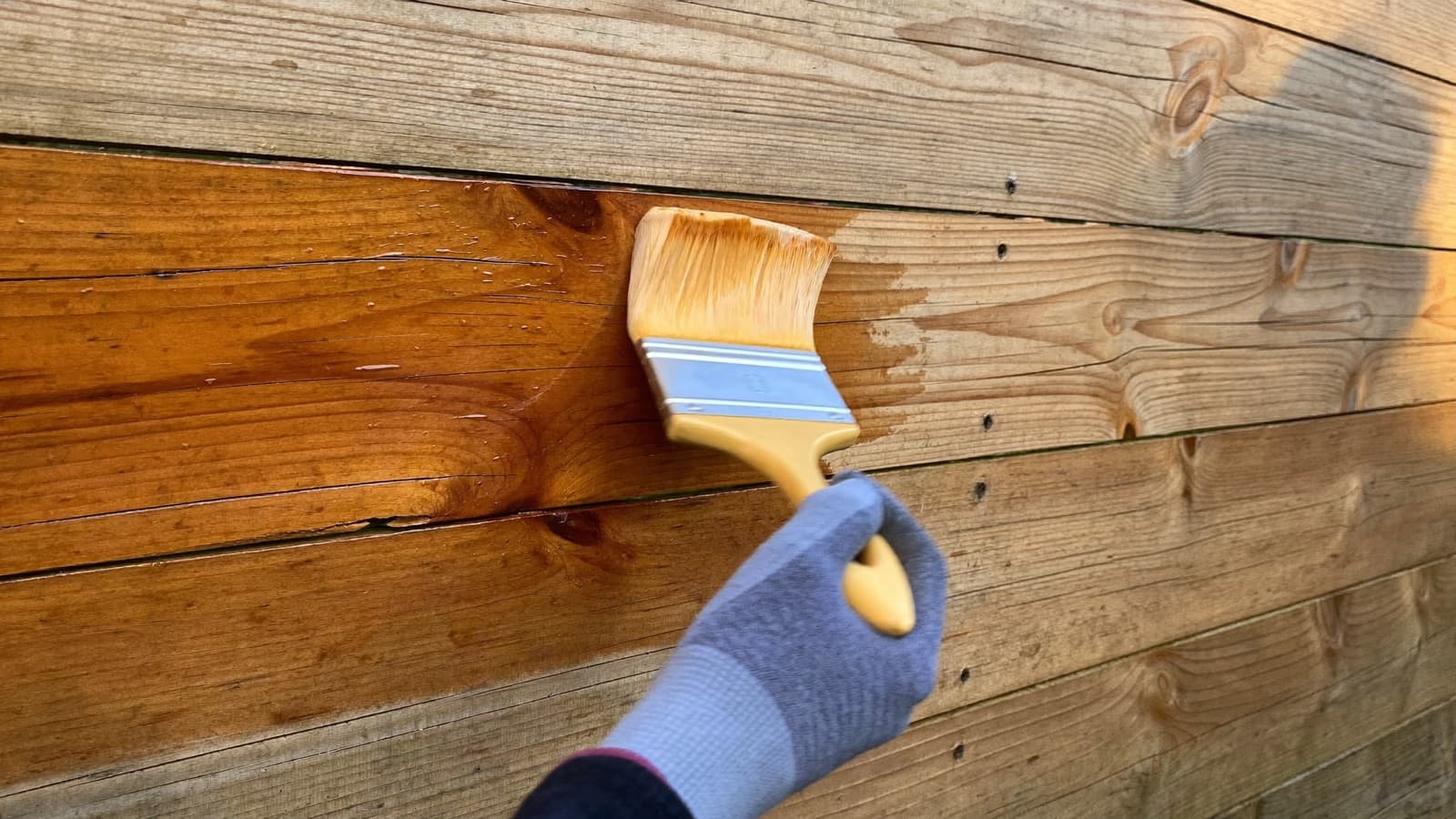
Why staining a wood fence matters more on the coast
Two forces age a wood fence here, and they take turns. Humidity keeps moisture cycling into and out of unsealed boards — swell, shrink, swell, shrink — which opens checks and cracks along the grain. Then UV goes to work on the exposed surface, breaking down the wood fibers and turning them gray. An unsealed pressure-treated fence in Jacksonville or Hubert starts graying within about a year, and once cracks open up, water gets past the surface and the clock speeds up.
None of this means wood was the wrong choice. It means wood comes with a maintenance cycle, and on the coast that cycle runs shorter than the one printed on the can. Our wood-vs-vinyl guide covers that trade honestly if you're still deciding between materials.
The classic mistake: staining new pressure-treated wood too soon
Pressure-treated lumber arrives from the mill saturated — the treatment process literally forces liquid into the wood. Stain a fence in that condition and the stain can't absorb. It sits on the surface, dries blotchy, and peels within months, and now you get to strip it before you can do the job right.
So the counterintuitive answer to when should I stain my new fence is: not yet. New pressure-treated wood needs weeks to a few months to dry out, depending on the lumber, the season it went up, and how much sun the fence line gets. A fence built in a dry October stretch is ready sooner than one built the week before a tropical system parks over Onslow County. Don't go by the calendar — go by the test below.
The water-bead test: how to know the wood is ready
Sprinkle water on the boards. If it beads up and sits on the surface, the wood is still too saturated to take stain — wait and test again in a couple of weeks. If the water soaks in within a minute or two, the wood is thirsty and ready.
Test more than one spot: a sunny run dries faster than the stretch behind the shed, and thick posts hold moisture longer than thin pickets. When the whole fence passes, you're clear. The same test tells you when an already-stained fence is due again — the day water stops beading on a sealed fence is the day the sealer has quit.
Stain types in plain English
Three broad options, no brand hype.
Clear sealer is a water repellent. It keeps rain out but has little pigment, and pigment is what blocks UV — so a clear-sealed fence still grays, and you'll be reapplying most often.
Semi-transparent stain adds pigment for real UV protection while still showing the wood grain. For most fences around here, this is the sweet spot: good protection, easy to reapply, forgiving to work with.
Solid stain is nearly paint. Maximum UV protection, hides the grain completely, covers older discolored wood well — but it fails by peeling instead of fading, and once you go solid you're committed: reapplying means scraping and stripping, not just washing and recoating. Whatever you pick, buy a reputable exterior product and read its label — the label knows things about that specific can that we don't.
Prep matters more than the product
Most failed stain jobs weren't bad stain — they were stain over a dirty or damp fence. Sealing mildew under a coat of stain doesn't kill it; it gives it a roof.
Clean first: a wood cleaner or brightener and a scrub, or a careful low-pressure wash — wide tip, moderate pressure, moving with the grain so you don't gouge soft pine. Then let the fence dry completely, which in our humidity means two to three rain-free days, not an afternoon. A cheap moisture-check: the same water-bead test, in reverse — if the boards feel cool and heavy, wait. The most boring day of the project is the one that decides whether the finish lasts.
Picking your weather window (July thunderstorm roulette)
Stain wants dry boards going in and dry weather after — most labels ask for no rain for roughly 24 hours and application out of intense direct heat. That makes high summer in coastal NC a gamble: pop-up thunderstorms most afternoons, and a 95-degree sun that flashes stain dry before it can penetrate.
The reliable windows here are the long dry stretches of spring and fall. If you must do it in summer, work in the morning, watch the radar, and stop while the boards still have hours to set up before the daily 3 p.m. storm rolls through Richlands or Holly Ridge. Heavy overnight dew counts against you too — a fence soaked at dawn isn't dry at 9 a.m.
Ground line and post tops: where rot actually starts
Rot doesn't attack a fence evenly. It starts where water sits: the bottoms of pickets near soil and mulch, and the tops of posts, where cut end grain drinks water like a straw.
Give those spots extra attention. Work stain into the end grain on post tops until it stops absorbing — or better, cap the posts. Keep mulch and soil pulled back off the bottom rail and picket bottoms; a fence bottom buried in wet mulch is on a countdown no stain can pause. While you're down there, look at the sprinkler pattern — a rotor head soaking the same three pickets every morning does more damage than a season of rain.
DIY or hire it out? An honest answer
Staining a fence is genuinely doable yourself. A typical backyard fence is a weekend: pump sprayer for coverage, brush in hand to back-brush it into the grain, decent podcast queue. If you own the sprayer already, the whole project costs you a couple cans of stain and some sore shoulders.
Where hiring out starts to make sense: tall privacy runs you can't reach comfortably, long farm and acreage fence lines out toward Richlands or Maysville where the square footage gets serious, or a fence whose old solid stain is peeling and needs stripping first — that prep job is where DIY morale goes to die. And if the fence has soft posts or rotting rails, staining isn't the project anyway; our repair-vs-replacement guide walks through that call.
The same physics applies to your deck — worse
Everything above goes double for a deck, because a deck is horizontal. Rain doesn't run off a deck board the way it sheds off a vertical picket — it sits, and sun hits the surface dead-on all day. That's why decks around here need attention on a shorter cycle than fences, and why the finish on the deck fails first every time.
Deck staining and refinishing is a service we do offer — decks involve sanding, board-by-board condition calls, and railing detail work that turns most people off the DIY version. Our deck maintenance calendar post lays out the full seasonal rhythm if you've got both a fence and a deck to keep ahead of.
Want a real fence estimate?
Send a few project details and we'll come back with next steps. Most details are optional — share what you can.
- Tap your fence type and rough length
- Name and phone — email optional
- We follow up to talk through the project
- Written pricing after we measure on-site
Prefer to talk it through?
(910) 708-9268No pressure — we’ll follow up to learn about your project and the next steps.

What kind of fence are you looking at?
Pick the closest — we'll talk details when we follow up.
Frequently asked questions
How long should a new pressure-treated fence dry before staining?
Don't trust a calendar answer — it depends on the lumber, the season, and your sun exposure. Use the water-bead test: sprinkle water on the boards, and if it soaks in within a minute or two instead of beading, the wood is ready. In our humidity that's typically somewhere between several weeks and a few months after the build.
What's the difference between sealing and staining a fence?
A sealer is a water repellent; a stain adds pigment, and most exterior stains seal as well. The pigment is what blocks UV, so a clear-sealed fence still grays while a stained one holds its color. More pigment means more protection: semi-transparent beats clear, solid beats semi-transparent — with trade-offs in looks and recoat effort.
How often do I need to re-stain a fence in coastal NC?
Plan on every 2 to 3 years for a semi-transparent stain here — coastal humidity and UV shorten the intervals printed on the can. Clear sealers need it more often, solid stains go longer between coats but cost more effort when they finally peel. The water-bead test tells you when yours is actually due.
Can I put new stain over the old stain?
Usually, if you're going the same opacity or darker: semi-transparent over old semi-transparent works after a good cleaning, and solid covers almost anything. What doesn't work is semi-transparent over an old solid stain — it can't absorb through that film, so you'd be stripping first. When in doubt, test a hidden section and see how it takes.
Will staining fix a fence that's already gray or rotting?
Gray, yes — gray is surface weathering, and a wood cleaner or brightener plus stain brings back more color than most people expect. Rot, no. Soft posts, crumbling rails, or pickets you can push a screwdriver into are repair territory, and stain over rot just makes the rot harder to see. Fix the structure first, then finish it.
Browse related fence services
Specific services in Jacksonville, NC that connect to this article.
Wood Fence Installation
Pressure-treated pine and cedar-look builds — privacy, picket, shadow box, and ranch styles.
Learn more →Fence Repair
Storm damage, leaning posts, broken panels, and gate problems — we patch, replace, or rebuild only what needs it.
Learn more →Deck Staining & Refinishing
Deck staining, sealing, and refinishing across Jacksonville and Onslow County — bring a gray, weathered wood deck back and protect it from coastal moisture.
Learn more →More from Jacksonville Fence Company
Wood vs Vinyl Fence in Jacksonville, NC
Coastal humidity, maintenance, cost, look — wood vs vinyl compared honestly for the Jacksonville market.
Fence Repair vs Replacement in Jacksonville, NC
When to patch and when to rebuild — for storm damage, rotten posts, broken panels, and gate sag.
How to Clean a Vinyl Fence in Coastal North Carolina
Hose, soft brush, mild soap — plus the fix for coastal NC's green-algae problem and the few things that actually damage vinyl.
How Long Does a Fence Last in Coastal North Carolina?
Honest lifespan ranges for wood, vinyl, chain link, and aluminum fences in coastal Onslow County — and what shortens or extends them.
A Year-Round Deck Maintenance Calendar for Coastal North Carolina
Season-by-season deck care for Onslow County — spring checks, hurricane readiness, fall cleanup, and what mild winters are good for.
Fence needs more than a coat of stain?
If the water-bead test says stain and the wood is sound, grab a sprayer — you've got this. But if you're finding soft posts, leaning sections, or rails past saving, send us a few photos and we'll tell you straight what's repairable and what isn't. Free estimate, no high-pressure pitch.