Wood vs Vinyl Fence in Jacksonville, NC
Wood vs. vinyl is the single most common material decision we walk through with Jacksonville homeowners. Both work in coastal North Carolina. Both have real trade-offs. This page lays them out side by side so you can make the call that fits your property and your timeline.
Want a real fence estimate?
Send a few project details and we'll come back with next steps. Most details are optional — share what you can.
- Tap your fence type and rough length
- Name and phone — email optional
- We follow up to talk through the project
- Written pricing after we measure on-site
Prefer to talk it through?
(910) 708-9268No pressure — we’ll follow up to learn about your project and the next steps.

What kind of fence are you looking at?
Pick the closest — we'll talk details when we follow up.
Upfront cost
Wood wins on upfront cost. Pressure-treated pine privacy fencing typically runs 30-60% less per foot than equivalent vinyl. Cedar narrows the gap. If the budget is the binding constraint and the home will be sold within a few years, wood often makes financial sense.
Long-term cost and maintenance
Vinyl wins on long-term cost when you account for maintenance. A well-built pressure-treated wood fence needs sealing or staining every 2-3 years to fight Jacksonville's humidity and storm exposure — that's real money and time. Vinyl is fence-and-forget-it for most owners. Posts and panels last 25+ years with just an occasional rinse.
How they age in coastal NC
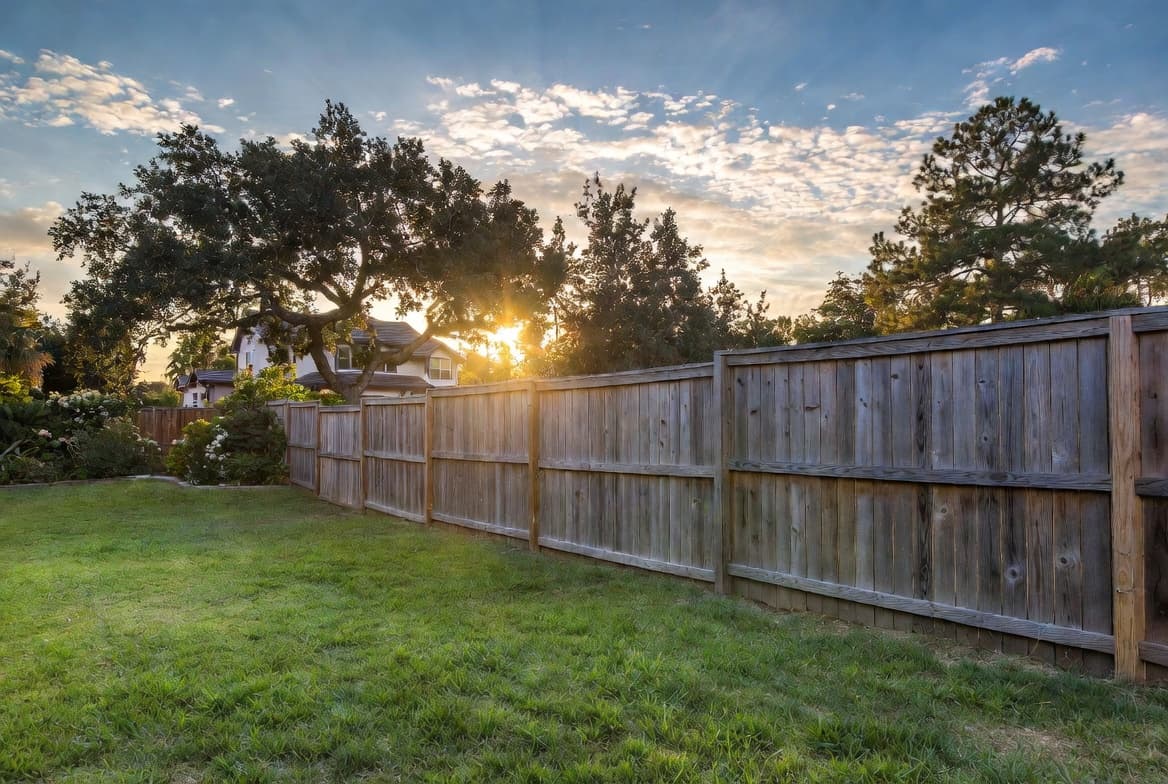
Wood: pressure-treated pine ages to silvery gray within 1-2 years unless stained. The ground-line of posts is the most common failure point, often 15-20 years in. Salt air and humidity in Sneads Ferry, North Topsail, and other coastal communities accelerate aging. Vinyl: holds color for 15+ years with quality UV-stabilized product. Doesn't rot. Doesn't warp the way wood can in tropical-storm heat cycles. Heavy impact (a falling limb) can crack a panel; matched replacement panels are usually easy to source.
Privacy and security
Both can be built solid-board for full privacy at 6 or 8 feet. Vinyl panels are typically tongue-and-groove with no through-gaps. Wood privacy fences can have small gaps that develop over time as boards dry and shrink — adds character to some eyes, breaks privacy for others.
Look and HOA fit
Wood reads as traditional, warm, and at home in older neighborhoods like Brynn Marr or downtown Swansboro. Vinyl reads as clean and modern, common in newer Holly Ridge or Sneads Ferry subdivisions. Some HOAs allow only one material — confirm before committing. Vinyl in tan or woodgrain finishes splits the visual difference but costs more than basic white vinyl.
Repairability
Wood wins on quick repair. A damaged board can be unscrewed and replaced in 15 minutes by a homeowner. A whole section can be rebuilt board-by-board. Vinyl requires sourcing the matching panel profile and color — usually doable if you have the original supplier info, but harder if records are lost. Vinyl posts and panels are typically replaced rather than patched.
Storm resistance
Properly installed, both handle Jacksonville's storm exposure well. Wood loses to large branches and direct impacts because individual boards crack. Vinyl loses to extreme wind on long, unbraced runs unless installed with proper post depth and the right panel gauge. We set posts deeper on both materials than minimum code suggests for coastal NC properties.
Pet and child safety
Both are safe at 6 feet for typical household pets and yards. Vinyl has smoother surfaces (no splinters). Wood can be sanded or covered with a vinyl strip on chew-prone sections. Neither is universally 'best' — depends on the dog and the yard.
Resale impact
We can't promise a specific dollar number — that depends on the appraisal and the market. Both materials are widely accepted by Jacksonville-area buyers. A clean, well-maintained fence of either material adds visible value at sale time more than a weathered, leaning fence does in either material.
Quick decision matrix
Pick WOOD if: budget is tight; you like the classic look; you're staying in the home <7 years; or your HOA prefers wood. Pick VINYL if: long-term low maintenance matters; the property is closer to the coast; you want consistent color for 15+ years; the HOA approves or requires vinyl; or you specifically want to avoid staining and sealing.
Jacksonville Fence Planning Checklist
The more of these you can answer before you reach out, the more accurate the first estimate will be. None of it is required — share what you can.
We use this same list internally when we walk a property. You can fill the gaps when we follow up.
Start My Estimate- Fence purposePrivacy, pets, pool, security, curb appeal, or some combination
- Material preferenceWood, vinyl, chain link, aluminum — or 'help me decide'
- Approximate linear footageEven a rough estimate (200 ft, 400 ft, etc.) helps
- Gate locations and widthsSingle walk gate, double drive gate, equipment access?
- Property line or surveyIs the line marked, confirmed by survey, or uncertain?
- HOA or neighborhood rulesMaterial, color, or height restrictions to confirm?
- Removal of an old fenceIs there an existing fence to tear out and dispose of?
- TimelineASAP, within 30 days, 1-3 months, or just researching?
- PhotosPhone-camera shots of the property line speed things up dramatically
Frequently asked questions
Which one rots faster in Jacksonville, NC?
Wood — vinyl doesn't rot. Pressure-treated wood resists rot well but the ground-line of posts is still the most common failure point at 15-20 years. Vinyl posts and panels don't rot regardless of moisture.
Does vinyl get brittle in cold weather?
Quality vinyl rated for outdoor use holds up fine in North Carolina winters. Very cheap unstabilized vinyl can become brittle in extreme cold — we don't install that grade.
Will vinyl fade in the sun over time?
Good UV-stabilized vinyl holds its color for many years. Cheaper vinyl yellows faster, especially in white. The product we install is rated for long coastal outdoor exposure.
Can I mix wood and vinyl on the same property?
Yes, but visually it can look uneven unless done intentionally (e.g., wood backyard privacy + aluminum or vinyl pool fence). Some HOAs require all visible fencing to match. Worth thinking through before starting.
Which lasts longer in the salt air at the coast?
Vinyl, by a meaningful margin. Salt air accelerates wood aging and corrodes untreated steel hardware. Vinyl is unaffected.
Browse related fence services
Specific services in Jacksonville, NC that connect to this guide.
Wood Fence Installation
Pressure-treated pine and cedar-look builds — privacy, picket, shadow box, and ranch styles.
Learn more →Vinyl Fence Installation
Low-maintenance privacy, picket, and ranch vinyl fencing built to handle coastal humidity and salt air.
Learn more →Privacy Fence Installation
Solid 6' and 8' wood or vinyl privacy fencing built for backyards, pools, and properties that want real separation.
Learn more →Fence Installation
New fence builds across Jacksonville and Onslow County for homes, businesses, and farms — built to handle coastal NC conditions.
Learn more →Other Jacksonville fence guides
Fence Cost in Jacksonville, NC
What actually drives fence cost in Jacksonville — materials, length, gates, terrain, HOA rules.
Chain Link vs. Wood Fence in Jacksonville, NC
Budget chain link or classic wood — cost, privacy slats, coastal durability, and HOA fit compared for Jacksonville yards, kennels, and commercial lots.
Pet and Dog Fencing in Jacksonville, NC
Height, materials, gate latches, digging dogs — practical pet fencing for Jacksonville backyards.
Related articles
Seasonal prep, maintenance routines, and local know-how connected to this guide.
Staining and Sealing a Wood Fence in Coastal North Carolina
When new pressure-treated wood is actually ready, the water-bead test, stain types without the hype, and the coastal 2-3 year cycle.
How to Clean a Vinyl Fence in Coastal North Carolina
Hose, soft brush, mild soap — plus the fix for coastal NC's green-algae problem and the few things that actually damage vinyl.
How Long Does a Fence Last in Coastal North Carolina?
Honest lifespan ranges for wood, vinyl, chain link, and aluminum fences in coastal Onslow County — and what shortens or extends them.
Still deciding between wood and vinyl?
Tell us about the property and what matters most — we'll talk through trade-offs honestly and quote both if it helps.