
How to Clean a Vinyl Fence in Coastal North Carolina
Vinyl fencing gets sold on two words: low maintenance. That's mostly true — but low maintenance isn't no maintenance, and in coastal North Carolina the humidity eventually puts a green tint on every shady fence line. The good news is that knowing how to clean a vinyl fence takes about two minutes to learn, the job takes under an hour, and you almost certainly own everything you need. This is a genuine do-it-yourself task, and we'd rather you do it yourself than pay anyone — including us — to spray soap at a fence.
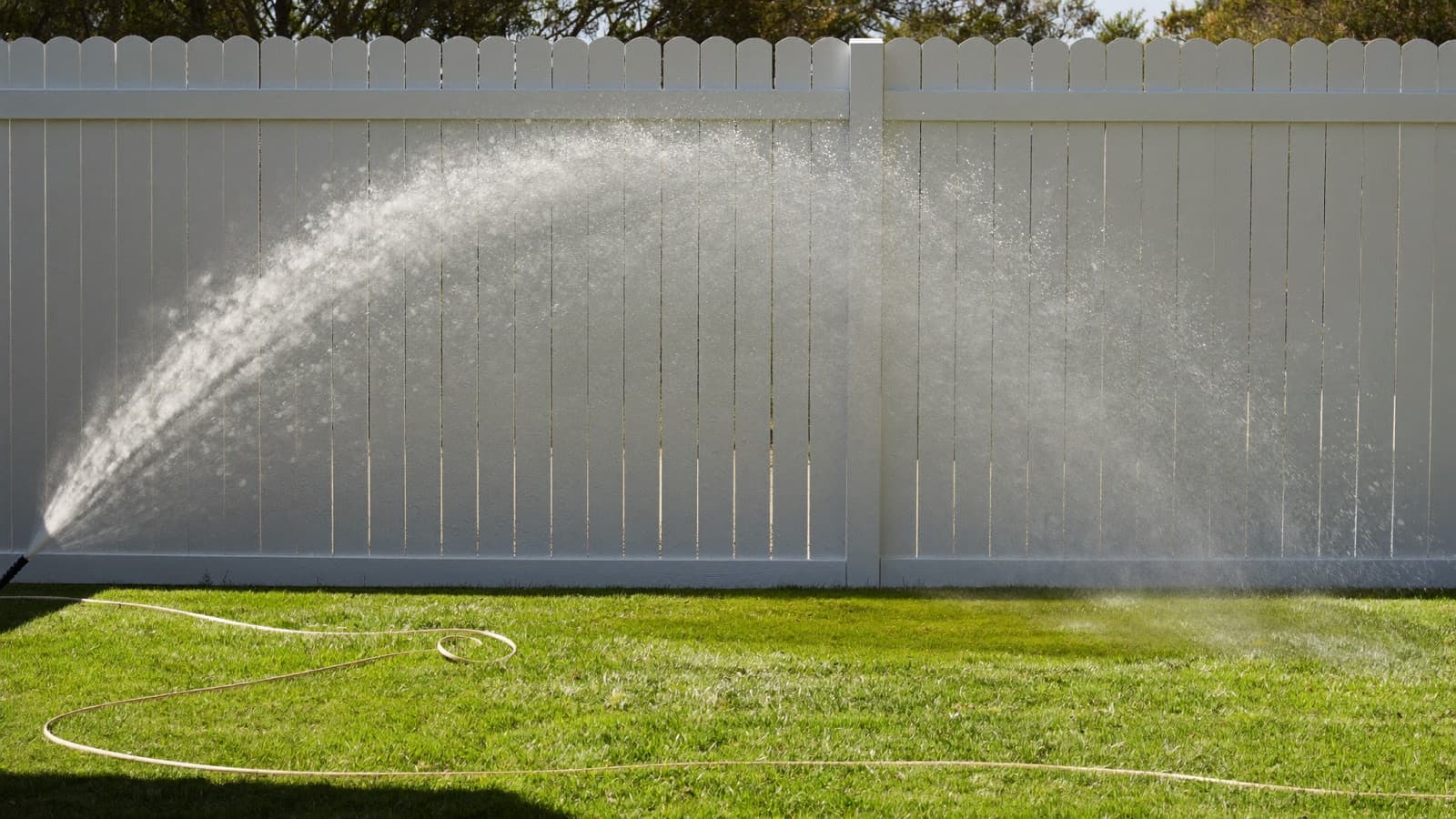
The short version: soap and water covers 90% of it
For ordinary dirt — mud splash from a rainstorm, grass clippings baked on by the sun, pollen film in April, dust from a dry stretch — a garden hose and a bucket of soapy water is the whole job. Vinyl is a non-porous surface. Dirt sits on top of it rather than soaking in, which is exactly why the material costs more up front than wood. Our vinyl fence cost guide walks through that trade in detail, but the short of it is: you paid the premium so cleaning would be this easy. Don't overcomplicate it.
What you need (it's probably already in the garage)
A garden hose with a spray nozzle. A soft-bristle brush — a car-wash brush on a pole is ideal because you can reach the top rail of a 6-foot privacy fence without a ladder. A bucket. Dish soap. That handles the routine wash.
For the green stuff, add white vinegar or a store-bought outdoor cleaner labeled safe for vinyl. That's the entire shopping list. If someone tries to sell you a specialty vinyl-fence cleaning system, keep your money.
How to clean a vinyl fence: the basic wash
Rinse the fence first, top to bottom, to knock off loose dirt so you're not grinding it around with the brush. Mix a squirt of dish soap into a bucket of water. Work in sections a couple of panels wide: scrub with the soft brush, then rinse before the soapy water dries on the surface — dried soap film is how you end up washing the same panel twice.
Most vinyl has a subtle wood-grain texture pressed into it. Scrub along that texture rather than across it and the dirt lets go faster. A typical backyard fence takes 30 to 45 minutes start to finish.
Green algae and mildew: the coastal NC problem
Here's the one that actually brings us questions. Walk any vinyl fence line in Jacksonville, Hubert, or Richlands and the side that faces north — or the run shaded by trees — will show a green haze sooner or later. That's algae and mildew, and it grows because our humidity keeps shaded vinyl damp for hours after the sun is up. The sunny side of the same fence stays white because UV and airflow dry it out.
Soap alone smears it around. Instead, use white vinegar diluted in water, or an outdoor house-and-fence cleaner that says vinyl-safe on the label. Wet the panel, apply, let it sit a few minutes, scrub, rinse well. Test a small low spot first if your fence is a color other than white.
One expectation to set: it comes back. That's not a product failure — that's Onslow County humidity doing what it does. Plan to hit the shady run once or twice a season and it never gets ahead of you.
What not to use on a vinyl fence
Three things do real damage. First, a pressure washer up close. High pressure at close range etches the surface, and once vinyl is scarred, dirt and algae grip it faster — you've permanently made your own cleaning job harder. If you insist on the pressure washer, use the widest fan tip, low pressure, and stay several feet back. Honestly, the hose is almost always enough.
Second, abrasives: steel wool, scouring powder, stiff wire brushes. Same problem — micro-scratches that collect grime.
Third, harsh solvents like acetone, lacquer thinner, or undiluted bleach. They can dull or discolor the surface, and whatever runs off lands on your grass and plantings. Mild soap, diluted vinegar, and patience beat all of them.
Near the water? Rinse off the salt film
If your fence is in Sneads Ferry, North Topsail Beach, Surf City, or the waterfront side of Swansboro, salt spray settles on it as a dull, slightly sticky film. It won't destroy the vinyl, but it dulls the finish, and salt sitting on metal gate hardware is a different story — that it will corrode.
The fix costs nothing: a plain-water rinse with the hose every month or so during the breezy season. No soap, no scrubbing. Two minutes while you're watering plants. Fences a few miles inland — Piney Green, Maysville, most of Jacksonville proper — can skip this one.
While you're out there: gates and hardware
A vinyl fence almost never fails first — the gate does. Since you're already standing there with a hose, give the hinges and latch a rinse, snug any screws that have worked loose, and swing the gate to check for sag or a latch that's drifting out of alignment. A drop of lubricant on the hinge pins once or twice a year keeps the salt-air squeak away.
Catching a sagging gate early is a five-minute adjustment. Catching it late means a racked gate frame and sometimes a leaning post — a real repair instead of a turn of a screwdriver.
When a stain means damage, not dirt
Some marks won't wash off because they aren't dirt. A chalky white film that rubs onto your fingers is UV oxidation, common on older or bargain-grade vinyl — scrubbing harder won't restore it. Yellow or warped panels near a grill are heat damage. Deep gouges from a string trimmer at the bottom of pickets are permanent, and a cracked post cap with black growth inside means water is getting into the post.
The test is simple: if soap and diluted vinegar won't move it, more effort won't either. That's the point where cleaning stops and repair starts — usually a single panel, rail, or cap swap rather than anything dramatic. If the whole fence is chalking and brittle, our wood-vs-vinyl guide is worth a read before you decide what replaces it.
How often to clean a vinyl fence in coastal NC
A realistic rhythm for our climate: one full wash each spring, right after pollen season dumps its yellow layer on everything. Hit the shady, north-facing runs again in mid-to-late summer when the algae haze reappears. If you're near the water, add the quick salt rinse monthly. And after any big storm, hose off the mud splash and leaf debris before it bakes on.
That's maybe two hours a year, total. Compare that to the stain-and-seal cycle a wood fence demands — our post on staining wood fences covers what that involves — and vinyl's pitch makes sense.
Want a real fence estimate?
Send a few project details and we'll come back with next steps. Most details are optional — share what you can.
- Tap your fence type and rough length
- Name and phone — email optional
- We follow up to talk through the project
- Written pricing after we measure on-site
Prefer to talk it through?
(910) 708-9268No pressure — we’ll follow up to learn about your project and the next steps.

What kind of fence are you looking at?
Pick the closest — we'll talk details when we follow up.
Frequently asked questions
Can I use a pressure washer on my vinyl fence?
You can, but you probably shouldn't. Up close, high pressure etches the surface, and scarred vinyl collects dirt and algae faster from then on. If you use one anyway, run the widest fan tip at low pressure from several feet back. A garden hose and a soft brush do the same job with zero risk.
What kills the green algae on a vinyl fence?
White vinegar diluted in water, or an outdoor cleaner labeled safe for vinyl. Apply, let it sit a few minutes, scrub with a soft brush, rinse. It will return — coastal humidity guarantees it — so plan on treating shady runs once or twice a season rather than expecting a permanent fix.
Is bleach safe on vinyl fencing?
Heavily diluted, plenty of people use it on white vinyl without trouble. But it can dull colored vinyl, it's rough on the grass and plants below the fence line, and it should never be mixed with vinegar or other cleaners. We'd start with diluted vinegar, and check your fence manufacturer's care guidance before reaching for anything stronger.
Why does only one side of my fence turn green?
Shade and moisture. The north-facing side and any run under trees stays damp longer each morning, and algae and mildew love damp vinyl. The sunny side gets dried out by UV and airflow. It's normal here — not a sign your fence is failing.
My fence has a chalky white film that won't rinse off. What is it?
That's oxidation — UV slowly breaking down the surface, most common on older or lower-grade vinyl. No cleaner reverses it. If it's one weathered section, you can live with it; if panels are also fading unevenly or getting brittle, it's worth a conversation about replacing the worst sections before they crack.
Browse related fence services
Specific services in Jacksonville, NC that connect to this article.
Vinyl Fence Installation
Low-maintenance privacy, picket, and ranch vinyl fencing built to handle coastal humidity and salt air.
Learn more →Privacy Fence Installation
Solid 6' and 8' wood or vinyl privacy fencing built for backyards, pools, and properties that want real separation.
Learn more →Fence Repair
Storm damage, leaning posts, broken panels, and gate problems — we patch, replace, or rebuild only what needs it.
Learn more →More from Jacksonville Fence Company
Vinyl Fence Cost in Jacksonville, NC
What moves vinyl fence pricing in Jacksonville — footage, height, style, gates, and coastal wind-rated builds.
Wood vs Vinyl Fence in Jacksonville, NC
Coastal humidity, maintenance, cost, look — wood vs vinyl compared honestly for the Jacksonville market.
Staining and Sealing a Wood Fence in Coastal North Carolina
When new pressure-treated wood is actually ready, the water-bead test, stain types without the hype, and the coastal 2-3 year cycle.
How Long Does a Fence Last in Coastal North Carolina?
Honest lifespan ranges for wood, vinyl, chain link, and aluminum fences in coastal Onslow County — and what shortens or extends them.
Fence Etiquette: Neighbors, Property Lines, and Who Gets the Good Side
The unwritten rules — talking to neighbors first, the good-side convention, property lines, and splitting costs.
Fence past the point of a wash?
Cleaning is your job — we just gave away the whole playbook. But if you're looking at cracked panels, a sagging gate, or a fence that's chalking out, send us a couple of photos and we'll tell you straight whether it's a small repair or time to talk replacement. Free estimate, no high-pressure pitch.