Getting Your Deck Hurricane-Ready in Coastal North Carolina
A deck doesn't fail in a storm the way a fence does. Fences get pushed over; decks get lifted, worked, and shaken apart at their connections. In coastal North Carolina — especially the elevated decks from Sneads Ferry down through North Topsail Beach and Surf City — hurricane deck preparation is mostly about checking hardware you can't see from a deck chair. Here's what to look at before the season, what to do in the last days before a storm, and how to handle a deck after one.
Why hurricanes take decks apart at the connections
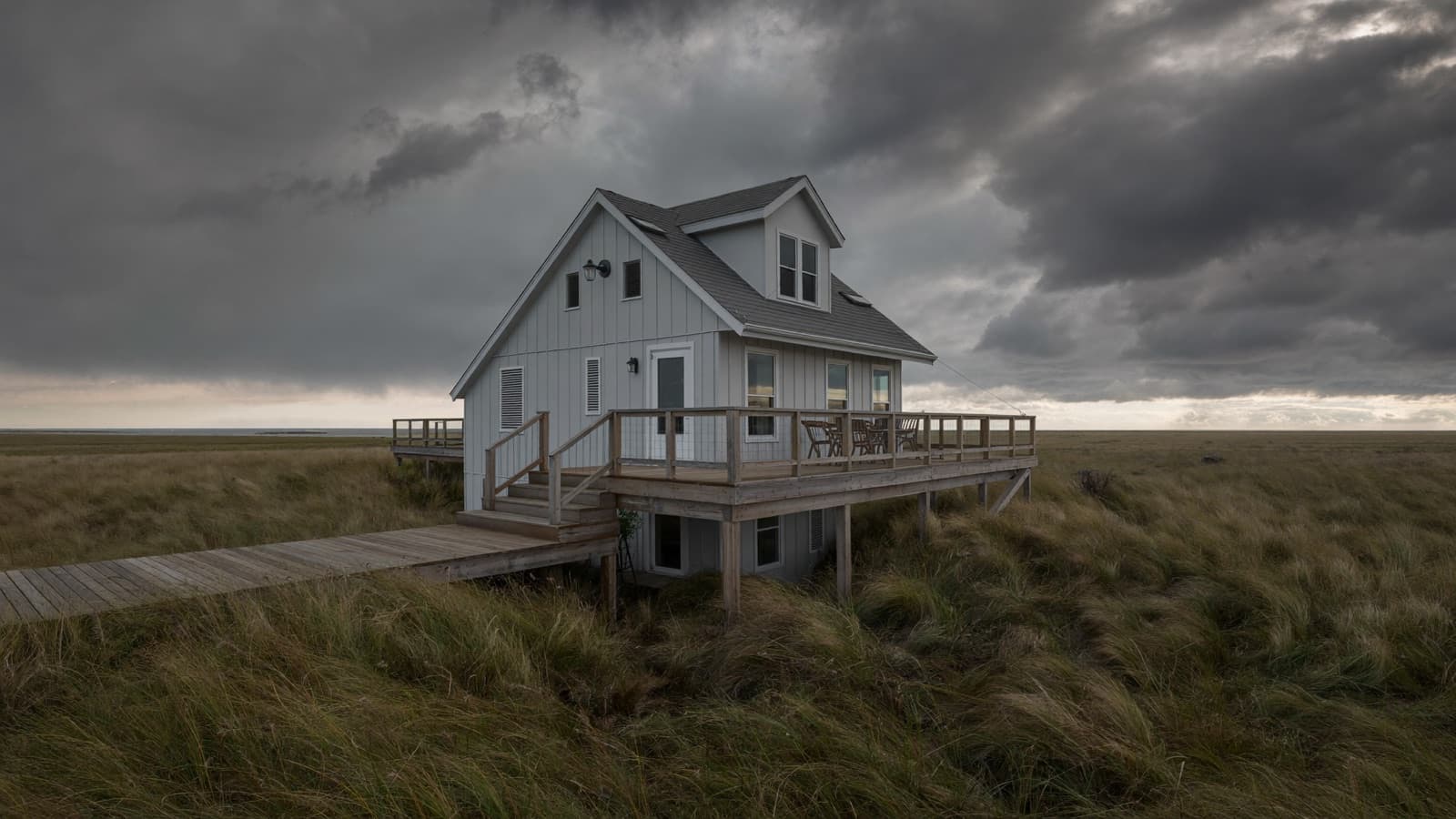
Wind doesn't push a deck over — it works on it. Gusts hitting the house deflect down and under an elevated deck, and the deck surface acts like a wing: hundreds of square feet of flat area with pressure underneath. That uplift doesn't have to lift the whole structure to do damage; it just has to work every fastener a little, thousands of times over the course of a storm.
That's why storm-damaged decks rarely look dramatic from above. The boards are usually fine. The damage lives at the connections — where the deck meets the house, where joists meet beams, where posts meet footings. Those are the points every pre-season check should focus on.
The ledger connection is where decks live or die
The ledger is the horizontal board that attaches the deck frame to your house, and it carries more responsibility than any other piece of lumber on the structure. When you read about decks failing badly, the ledger connection is usually the culprit.
What you can check yourself: any gap opening between the ledger and the house wall, rust streaks bleeding from the fasteners, and soft or dark-stained wood around the connection — a sign water has been getting behind it. How a ledger should be fastened and flashed for your specific house is a question for a professional or your Onslow County inspector, but what you can see is whether it's tight, dry, and not moving. If a ledger shows movement or rot, stop guessing and get it looked at before the season, not after.
Joist hangers, post bases, and the small steel doing big jobs
Get under the deck with a flashlight once a year. The galvanized hangers and connectors down there are what actually hold the frame together, and coastal salt air is patient with them. Look for white or rust-colored corrosion bloom on hangers, empty holes where fasteners backed out or were never installed, and hangers that have visibly shifted off square.
At ground level, check where the posts meet their footings. Posts sitting in standing water, buried in mulch, or resting on cracked concrete deserve attention. None of this requires expertise to spot — it requires actually looking, which is the step most deck owners skip.
Fasteners age fast within reach of salt air
The closer you are to the water, the shorter the life of ordinary hardware. Decks in Surf City, North Topsail Beach, and along the New River see fastener corrosion years ahead of an identical deck inland in Richlands. Screws lose their heads, nails back out with the seasons' wet-dry cycling, and a connector can look serviceable while its cross-section has quietly thinned.
A simple test: pick a few deck screws in different areas and try to snug them. If heads snap off or strip under light pressure, the fasteners across the deck are on borrowed time — and a hurricane is exactly the load test you don't want to run first.
The twenty-minute pre-season deck inspection
Before June, work through this list. Shake every railing section hard — wobble means loose or corroded connections, and railings are what people grab when the deck is wet. Bounce in the middle of long spans; new sponginess since last year means something has moved. Probe posts at grade with a screwdriver for rot. Check the stairs — stringers pulling away from the deck, treads loose at the nose. Then get underneath and look at the hangers, the beam connections, and the ledger.
Anything that moves, weeps rust, or feels soft goes on the fix list. Our post on the signs a deck needs repair walks through what separates cosmetic wear from structural trouble.
Elevated coastal decks see the worst exposure
The decks that take the hardest beating in a storm are the tall ones near open water — elevated structures in North Topsail Beach and Surf City standing on posts eight or more feet tall, with unobstructed wind coming off the ocean or the sound. More height means more wind under the deck, more leverage on every post, and more movement at every connection.
If that describes your deck, hold it to a higher standard: bracing, post condition, and connection hardware matter more at height. These are also the decks where a professional eye every few years earns its keep — the loads involved are simply bigger than anything an inland ground-level deck ever sees.
The last two days before a storm: clear the deck
Everything on the deck is a potential projectile. Furniture, planters, umbrellas, and grills go inside or into a garage — an umbrella still in its stand is the first thing to fly. Never store a propane tank inside the house; if the grill comes in, the tank stays outside, secured upright and away from windows.
Don't forget the small stuff: doormats, potted herbs, string lights, wind chimes, dog bowls. A storm doesn't distinguish between a flying planter and a flying brick. Clearing a deck takes twenty minutes and is the single highest-value thing you can do for the deck, the house windows, and the neighbors.
What not to do when a hurricane is inbound
Don't strap furniture to the railings — you're tying sails to the component least able to take the load, and the usual result is the furniture and the railing leaving together. Don't attempt structural fixes in the last 48 hours; a half-installed connector is weaker than what it replaced. Don't stack cleared furniture against the sliding glass door, where it becomes a battering ram. And don't wrap or tarp the deck — tarps add wind load and then go airborne.
If the pre-season checks got done, the pre-storm job is just clearing and securing. If they didn't, the day before a storm is not the time to start unbolting things.
After the storm: look before you step
A storm-damaged deck can look fine and not be. Before anyone walks out on it, inspect from the ground: are the posts still plumb? Has the deck pulled away from the house — any new gap at the ledger line? Are boards heaved, railings leaning, stairs shifted? Look for scour where wind-driven rain or flooding washed soil away from the footings, which is common in our sandy ground.
If anything has visibly moved — especially at the house connection — stay off the deck and have it inspected before it carries people again. A deck that shifted in a storm has already told you its connections gave. The next load test shouldn't be your family standing on it.
When to call for a professional inspection
Call for an inspection when the deck visibly moved or separated in a storm; when railings or stairs feel different underfoot than they did before; when the deck is elevated, more than a few years old, and has never been looked at; or when you're buying a coastal home with an existing deck. We inspect decks we didn't build, and the honest outcome is often good news — a punch list of hardware and a few boards rather than a rebuild.
When a deck is genuinely at the end of its life, we'll say that plainly too, and our deck cost guide covers what actually drives replacement pricing. Either way you get a straight answer, not a scare pitch.
Want a real deck estimate?
Send a few project details and we'll come back with next steps. Most details are optional — share what you can.
- Tap your project type and material
- Name and phone — email optional
- We follow up to schedule the on-site visit
- Written pricing after we measure
Prefer to talk it through?
(910) 708-9268No pressure — we’ll follow up to learn about your project and the next steps.

What's the deck project?
One tap — we'll talk details when we follow up.
Frequently asked questions
Can wind really lift a deck?
It can, and more often it partially lifts one — working fasteners loose and shifting connections without visibly moving the structure. Uplift on the underside of an elevated deck is a real load path, which is why storm prep focuses on connection hardware rather than deck boards.
How do I know if my ledger connection is in trouble?
Warning signs you can see: a gap between the ledger and the wall, rust streaks from the fasteners, soft or dark-stained wood, and any flexing where the deck meets the house. What the connection should look like for your specific home is a question for a professional or your county inspector — but movement and rot are never right.
Should I tie deck furniture down instead of bringing it in?
Bring it in. Tied-down furniture transfers wind load into whatever it's tied to — usually the railing, which is the weakest structural element on the deck. Inside beats secured, and secured beats loose, but inside wins.
My deck feels bouncier since the storm — is that serious?
Treat it as serious until proven otherwise. A change in how a deck feels means something moved — a connector, a post, the ledger. Get it inspected before the next cookout puts twelve people on it. New bounce is the connections talking.
Do you inspect decks you didn't build?
Yes — most of the decks we inspect were built by someone else. If the deck is in good shape, that's the report you get. We're not in the business of inventing repairs; a clean inspection today tends to turn into real work years later, when it's actually needed.
Browse related deck services
Specific services in Jacksonville, NC that connect to this article.
Deck Repair
Deck repair across Jacksonville and Onslow County — board replacement, rot, loose railings, stair fixes, and the framing problems behind them.
Learn more →Deck Inspection
Deck safety inspections across coastal NC — we assess railings, boards, stairs, ledger, and posts before any repair or replacement.
Learn more →Deck Railing & Stairs
Deck railing and stair installation across Jacksonville and Onslow County — wood, composite, aluminum, and cable railing built to guard-height code.
Learn more →More from Jacksonville Fence Company
How Much Does a Deck Cost in Jacksonville, Maysville & Coastal NC?
The real drivers of deck pricing in Jacksonville — size, material, railings, stairs, demo, and permits — and why a per-project estimate beats a flat number.
Deck Permits in Jacksonville & Onslow County: Yes, You Need One — Here's What It Involves
Yes, decks need a permit here — what the application takes, the five inspections, and how we pull it for you.
How to Prepare Your Fence for Hurricane Season in Jacksonville, NC
A pre-season fence walkthrough for coastal Onslow County — plus what to do before a named storm and after one.
10 Signs Your Deck Needs Repair — or a Professional Inspection
Soft boards, wobbly rails, rusted hangers, ledger trouble — the ten signs to check and when to call a pro.
A Year-Round Deck Maintenance Calendar for Coastal North Carolina
Season-by-season deck care for Onslow County — spring checks, hurricane readiness, fall cleanup, and what mild winters are good for.
Want a straight answer on whether your deck is storm-ready?
We inspect and repair decks across Jacksonville and the beach communities — tell us what you've got and we'll tell you what we'd fix and what we'd leave alone. No high-pressure pitch.