Chain Link vs. Wood Fence in Jacksonville, NC
Chain link vs. wood is the classic budget-versus-looks fence decision, and it comes up constantly in estimate requests for chain link fence installation in Jacksonville, NC — backyards, dog runs, rentals, and commercial lots. Both materials work in coastal North Carolina, and both have honest weaknesses. This page compares them the way we would across a kitchen table: cost first, then privacy, durability, maintenance, and where each one actually belongs.
Want a real fence estimate?
Send a few project details and we'll come back with next steps. Most details are optional — share what you can.
- Tap your fence type and rough length
- Name and phone — email optional
- We follow up to talk through the project
- Written pricing after we measure on-site
Prefer to talk it through?
(910) 708-9268No pressure — we’ll follow up to learn about your project and the next steps.

What kind of fence are you looking at?
Pick the closest — we'll talk details when we follow up.
Upfront cost
Chain link wins on upfront cost — standard galvanized chain link is often the cheapest per-foot enclosure we install. Vinyl-coated chain link (usually black or green) adds roughly 25–40% over galvanized but still typically lands below a pressure-treated pine privacy fence of the same length. Wood costs more per foot because there’s simply more material in it: pickets, rails, and heavier posts versus mesh, line posts, and a top rail. If the goal is enclosing the most yard for the least money, chain link is the honest starting point.
Privacy — where wood pulls away
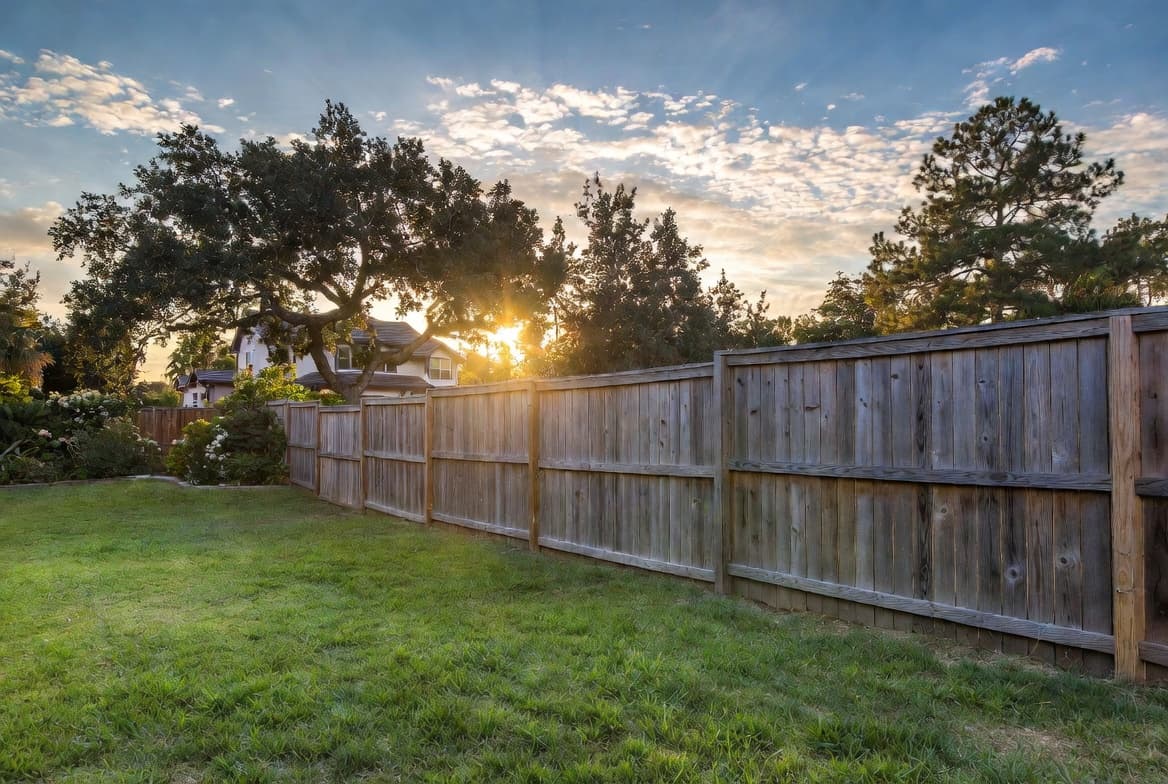
A standard chain link fence is transparent. Privacy slats — vinyl strips woven vertically through the mesh — help, and they block most sight lines depending on the slat style, but slatted chain link never matches a solid-board wood fence. Slats also add real cost per foot and catch wind that bare mesh doesn’t. If privacy is the main job of the fence, a 6-foot wood privacy build beats chain-link-plus-slats on both coverage and looks. If privacy is a nice-to-have on a budget fence, slats are a reasonable middle option.
Durability in coastal humidity and salt air
Steel doesn’t rot, and that matters in Jacksonville’s humidity. Galvanized chain link resists corrosion well inland; closer to the water — Sneads Ferry, North Topsail, Surf City — salt air works on fittings, cut ends, and any spot where the zinc coating wears, which is where vinyl-coated chain link earns its premium. Pressure-treated pine resists rot but doesn’t eliminate it: the ground line of wood posts is the most common failure point, often 15-20 years in, and coastal moisture accelerates it. Neither material is fragile here — they just age differently.
Maintenance
Chain link is close to maintenance-free: an occasional rinse, and maybe a mesh re-tension years down the road. Wood needs sealing or staining every 2-3 years to fight the humidity and sun, or it grays, cups, and eventually rots at the ground line. That’s real money and real weekends over the life of the fence. If you don’t want a recurring upkeep task — landlords and busy households, especially — chain link is the lower-effort fence by a wide margin.
Storm performance
Open mesh lets wind pass through, which is why chain link often rides out tropical-storm winds that flatten solid privacy fences. Add privacy slats and that advantage shrinks — the fence starts catching wind more like a solid panel. Wood privacy fences handle our storms fine when the posts are set deep (we set deeper than minimum on coastal properties), but solid boards catch wind, and falling limbs crack pickets. On exposed lots where wind load worries you, bare chain link has a genuine structural edge.
Repairability
Both repair well, differently. A damaged wood board unscrews and replaces in minutes, and a whole section can be rebuilt board-by-board. Chain link mesh gets re-tensioned or spliced, bent top rail is replaced in individual sticks, and a bent line post swaps out on its own — though a damaged terminal post at a corner or gate needs proper replacement to keep the mesh tension right. Neither material forces a full-fence replacement over localized damage.
Looks, HOA acceptance, and resale
This is wood’s category. Wood reads warm and residential, suits street-facing lines, and is accepted by nearly every HOA in the area. Chain link reads utilitarian — many Jacksonville-area HOAs restrict it to backyards or prohibit it outright, and black vinyl-coated chain link is approved more often than bare galvanized. At sale time, a clean wood privacy fence generally shows better than chain link on the same lot. Check the covenants before designing either, and confirm any permit questions with the City of Jacksonville or Onslow County, depending on where the property sits.
Security, kennels, and commercial lots
Chain link’s transparency is a feature for security: on commercial and storage lots you can see the whole fence line from the street, so there’s nowhere to work unseen — one reason it stays the default for equipment yards and business perimeters around Jacksonville. It’s also the standard for dog runs and kennels: a 10×20 chain link run stands up to daily contact, dogs can see out, and it hoses clean. Wood flips the trade — a 6-foot privacy fence hides whatever’s behind it, which is good for a backyard and less good for a lot you want visible.
Where each one typically wins around here
In practice, chain link fence installation in Jacksonville, NC gets chosen for budget backyard enclosures, dog runs, rental properties, farm perimeters, and commercial lots — anywhere function and cost outrank looks. Landlords with rentals around Camp Lejeune pick it for exactly that reason: it contains pets through tenant turnover with almost no upkeep. Wood gets chosen for street-visible lines, subdivision backyards, and anywhere privacy or curb appeal drives the decision. Plenty of properties use both — wood privacy across the back, chain link along the side runs nobody sees.
Quick decision matrix
Pick CHAIN LINK if: budget is the binding constraint; the fence is for a dog run, kennel, rental, farm, or commercial lot; you want near-zero maintenance; or storm wind load on an exposed lot concerns you. Pick WOOD if: privacy is the point; the fence faces the street; your HOA restricts chain link; or resale curb appeal matters. If you’re genuinely torn, we’ll quote both — the price gap on your actual footage settles a lot of debates.
Jacksonville Fence Planning Checklist
The more of these you can answer before you reach out, the more accurate the first estimate will be. None of it is required — share what you can.
We use this same list internally when we walk a property. You can fill the gaps when we follow up.
Start My Estimate- Fence purposePrivacy, pets, pool, security, curb appeal, or some combination
- Material preferenceWood, vinyl, chain link, aluminum — or 'help me decide'
- Approximate linear footageEven a rough estimate (200 ft, 400 ft, etc.) helps
- Gate locations and widthsSingle walk gate, double drive gate, equipment access?
- Property line or surveyIs the line marked, confirmed by survey, or uncertain?
- HOA or neighborhood rulesMaterial, color, or height restrictions to confirm?
- Removal of an old fenceIs there an existing fence to tear out and dispose of?
- TimelineASAP, within 30 days, 1-3 months, or just researching?
- PhotosPhone-camera shots of the property line speed things up dramatically
Frequently asked questions
Is chain link always cheaper than wood in Jacksonville?
Per foot, galvanized chain link usually is — it’s often the cheapest enclosure we quote. Vinyl-coated mesh and privacy slats narrow the gap, and a heavily slatted, vinyl-coated build can land close to a basic wood privacy fence. Real footage, height, and gate count decide it, which is why we quote both when an owner is torn.
Can a chain link fence be private?
Partially. Privacy slats woven through the mesh block most sight lines, but they never match a solid-board fence, and they add cost and wind load. If privacy is the primary job, a wood or vinyl privacy fence is the better tool.
Does chain link rust in the salt air near the coast?
Galvanized chain link resists rust well inland. Closer to the water, salt air works on fittings and any spot where the zinc coating is compromised, so for coastal properties we usually recommend vinyl-coated chain link — the coating adds meaningful corrosion protection for a modest premium.
Will my HOA allow a chain link fence?
Many Jacksonville-area HOAs restrict chain link to backyards or don’t allow it at all, and black vinyl-coated is approved more often than bare galvanized. The covenants document attached to the property deed is authoritative — confirm before designing around it.
Which is better for a dog run or kennel?
Chain link, in most cases. It’s the standard kennel material for a reason: durable against daily contact, transparent so dogs can see out, and easy to clean. For a full-yard fence where the dog reacts to every passerby, a wood privacy fence can calm things down — depends on the dog.
Browse related fence services
Specific services in Jacksonville, NC that connect to this guide.
Chain Link Fence Installation
Galvanized and vinyl-coated chain link fences for yards, commercial lots, dog runs, and storage areas.
Learn more →Wood Fence Installation
Pressure-treated pine and cedar-look builds — privacy, picket, shadow box, and ranch styles.
Learn more →Privacy Fence Installation
Solid 6' and 8' wood or vinyl privacy fencing built for backyards, pools, and properties that want real separation.
Learn more →Commercial Fencing
Fencing for businesses, contractor lots, dumpster enclosures, storage yards, and industrial sites.
Learn more →Other Jacksonville fence guides
Related articles
Seasonal prep, maintenance routines, and local know-how connected to this guide.
Planning Farm and Pasture Fencing in Onslow County
How acreage changes fence math: matching fence to animal, gate sizing, brace posts, wet ground, and NC 811.
Fencing and PCS Moves: A Camp Lejeune Family's Guide
How PCS timelines change fence decisions — renter rules, temporary options, the 3–4 year material math, and lead times.
Torn between chain link and wood?
Tell us the yard, the job, and the budget — we’ll quote both honestly and tell you which one we’d build on your lot.