
Fencing and PCS Moves: A Camp Lejeune Family's Guide
A big share of the yards we fence around Jacksonville belong to Camp Lejeune and New River families working against a PCS clock. That clock changes almost every fence decision — what material makes sense, whether to build at all, and how a renter gets a fence for a military family without violating a lease. We're civilians, so nothing here is base policy or regulation. It's the practical view from a contractor who has quoted a lot of fences with a report date circled on the calendar.
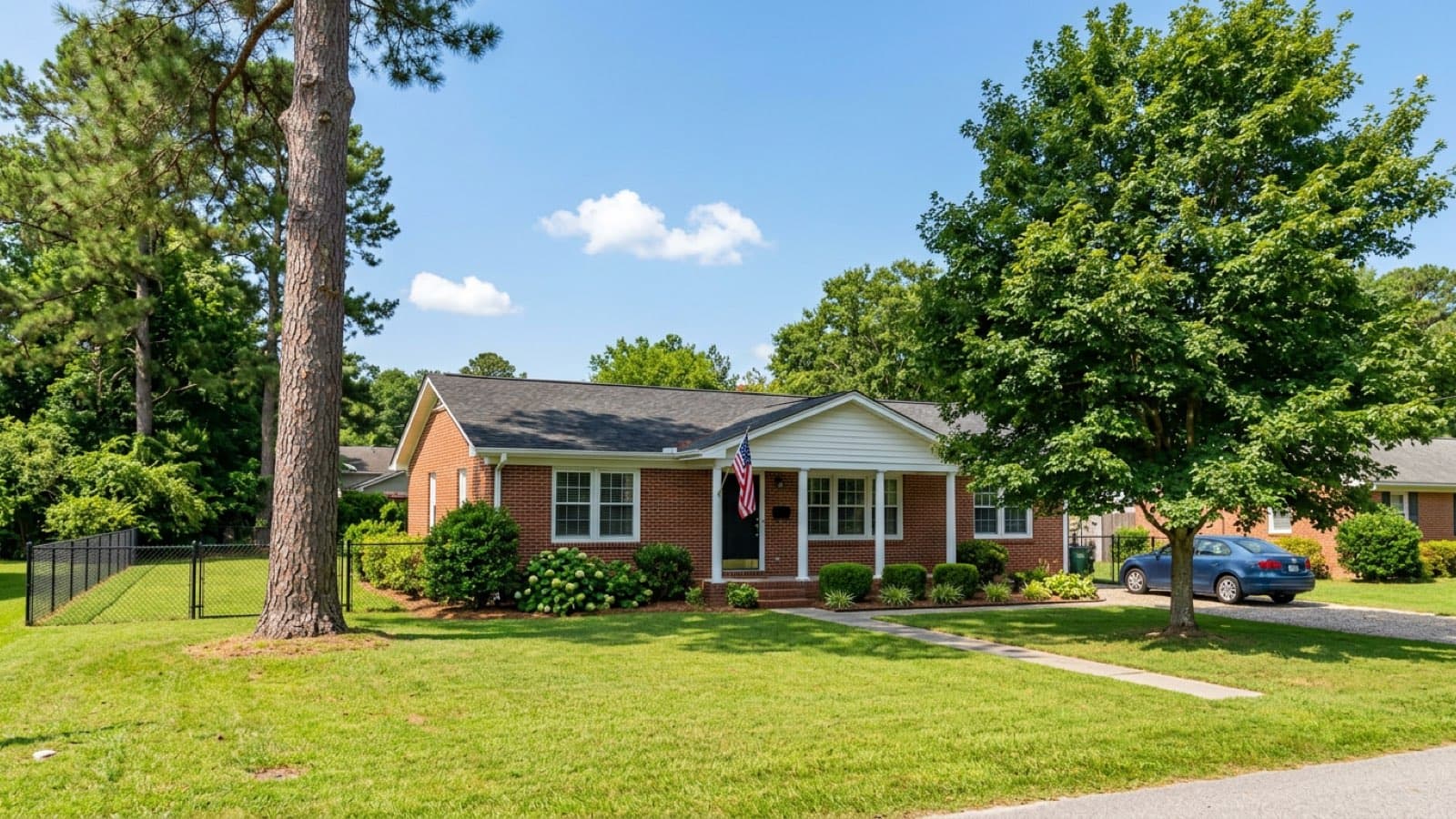
Why a PCS timeline changes every fence decision
Most fence advice assumes you'll own the house for fifteen or twenty years. Around Camp Lejeune, three to four years is the more common horizon, and plenty of families are renting on a lease that's shorter still. That flips a lot of standard guidance on its head.
Long-horizon advice says spend more up front on low-maintenance material and collect the savings over two decades. Short-horizon reality says you may never collect those savings — someone else will. And a fence that takes ten weeks to schedule is useless if you report in eight. None of this makes a fence before a PCS a bad idea — the decisions just deserve their own math.
Renting? The fence belongs to your landlord — get permission in writing
If you rent, the fence is not yours to modify — not to build, not to extend, not to swap a gate on. The property owner has to say yes first, and "the property manager sounded fine with it on the phone" is not the same as yes. Get it in writing before you call any contractor. An email or text thread that clearly approves the work covers most landlords — but it needs to exist. We won't set posts on a rental without it.
What landlords typically care about is predictable: who pays, who owns the fence when you leave, whether the contractor is insured, what the fence will look like from the street, and whether the HOA has to approve it. Bring answers to those five things and most reasonable owners say yes, because a fence usually makes their property easier to rent to the next military family with a dog.
Temporary options when the lease or the timeline says no
When permanent work is off the table — a landlord who declines, or a window too short to justify it — there are two workhorse options. Removable kennel panels are prefab sections that sit on grade, bolt together into a dog run, and load into the moving truck when you PCS. No digging, no permission drama, and they follow you to the next duty station. The trade-off is size: they make a run, not a yard.
The step up is a galvanized chain-link run — the most affordable full-yard enclosure and the one landlords approve most readily, because it's unobtrusive and straightforward to remove later. One thing to know: "temporary" stops applying the moment posts go in the ground. Any dig requires an NC 811 utility-locate call first — that one is a genuine state legal requirement, not a suggestion — and posts set in concrete are a commitment, whoever ends up owning them.
Buying on a 3–4 year horizon: the wood-vs-vinyl math flips
Our usual honest comparison: vinyl costs meaningfully more than pressure-treated wood up front — often 30–60% more — and earns it back over fifteen or twenty years of not staining, not sealing, not replacing posts. That math is real — and it assumes you're there to collect.
Sell in three or four years and you pay vinyl's full premium while the next owner banks the savings. For a lot of Camp Lejeune buyers, pressure-treated pine is the smarter play: lower cost in, it looks sharp for the years you own it, and one cleaning-and-staining pass before listing has it photographing well. The exception worth thinking about: if you might keep the house as a rental after you PCS — a common move here — vinyl's near-zero maintenance suddenly makes sense again, because you won't be in Onslow County to deal with a fence that needs work. Our fence cost guide breaks down the rest of the price drivers.
Dogs, rentals, and the waitlist reality
Plenty of families end up renting in town while they wait on housing, and if a dog is part of the family, "fenced yard" filters the rental listings hard. We regularly see renters offer to add a fence — at their own cost, with the owner's written permission — rather than lose a house they like in Piney Green or Sneads Ferry. Done right, everybody wins: the family gets the yard now, the owner gets a more rentable property later.
Containment is about the dog, not the fence style. Four feet holds many dogs; athletic breeds — huskies, shepherds, anything that treats a fence as a suggestion — need five or six. Diggers need attention at grade, and sight-driven dogs often do better behind solid privacy fence than chain link they can see through. Our pet fencing guide covers heights and materials by temperament.
Lead times vs. report dates: plan the calendar backwards
The question we get most from PCS families isn't about material — it's "can this be done before we leave?" The honest answer: it depends on the season and the material. Spring and early summer are the busiest stretch, and special-order items — certain vinyl colors, ornamental aluminum — take longer to arrive than pressure-treated pine that's stocked locally. A tropical system parked over Onslow County can slide everyone's schedule a week.
So work backwards from your report date and leave margin — you'll want the fence done and touch-ups handled before the packers show up, not the week after. Tell every contractor your hard date up front. A good one will tell you straight whether it's makeable; a bad one will say yes and then not make it. Our post on the best time to install a fence covers the seasonal rhythm in more detail.
Who handles HOA approval when you're mid-move?
HOA architectural approval belongs to the homeowner — a contractor can't submit for you, though we can supply the drawings, material specs, and site sketch most applications ask for. The catch on a PCS timeline: many of the boards we work around review requests on a monthly cycle — miss this month's meeting and you wait for the next, a month you may not have.
If you're buying from a distance, ask for the covenants and the architectural request form as early as the transaction allows, and submit the fence application as soon as you legally can. If you're selling, don't start unapproved work on the way out — a covenant violation discovered during a sale is a mess you'll be handling from three time zones away. Either way, get the approval in writing and leave a copy with the house documents; the next owner will thank you.
Selling before you go: what buyers' inspectors flag on fences
Home inspectors around Jacksonville look at fences the same way they look at everything else: for deferred maintenance. The usual write-ups are leaning or heaved posts, rot at the grade line where sandy soil holds moisture against wood, gates that drag or won't latch, loose and missing pickets, and mildew blooming on the shaded north face. Individually small; together they read as "this house wasn't kept up," and that reading costs sellers money.
A clean, functioning fence quietly helps a listing; a half-finished fence project actively hurts one. An abandoned run with three posts and no panels doesn't say "potential" to a buyer — it says "problem I'm inheriting." If you've started something you can't finish before you report: finish it, remove it, or expect it to come up. Often the right pre-listing move is a repair, not a new fence — straighten the posts, rehang the gate, replace the rotted sections — and we'll tell you when that's the case.
When not to build a fence before a PCS
We'd rather lose a job than build one that doesn't make sense, so here's the straight version. Don't build if you rent and the owner says no — kennel panels and the long leash are your options. Don't start if your report date sits inside a realistic lead time; a fence finished after the moving truck helps nobody, and a fence rushed to beat the truck helps nobody twice. And don't build purely for resale on a yard that's already decent — buyers rarely pay back the full cost of a brand-new fence, and that money often works harder on paint and curb appeal.
Build when you'll actually live behind it: a dog that needs a yard now, kids who need containment now, a few good years of backyard use before the next set of orders. A fence you use is worth it. A fence you build for someone else's spreadsheet usually isn't.
Want a real fence estimate?
Send a few project details and we'll come back with next steps. Most details are optional — share what you can.
- Tap your fence type and rough length
- Name and phone — email optional
- We follow up to talk through the project
- Written pricing after we measure on-site
Prefer to talk it through?
(910) 708-9268No pressure — we’ll follow up to learn about your project and the next steps.

What kind of fence are you looking at?
Pick the closest — we'll talk details when we follow up.
Frequently asked questions
How far ahead of our report date should we order a fence?
Work backwards and leave real margin. Quote-to-completion depends on the season and material — spring and early summer book up fastest, and special-order vinyl or aluminum adds arrival time on top of scheduling. Tell us your hard date on the first call and we'll tell you straight whether it's makeable.
Can you install a fence at our rental near Camp Lejeune?
Yes — with the property owner's written permission. An email or text approving the specific work is usually enough, but we won't dig on a rental without it. If it helps, we'll provide the specs, sketch, and insurance details most landlords want to see before saying yes.
Is wood or vinyl better if we're selling in three or four years?
Usually wood. Vinyl's premium pays off over fifteen-plus years of skipped maintenance — savings you won't be around to collect on a PCS timeline. The exception is if you might keep the house as a rental after you leave; then vinyl's low maintenance is worth paying for.
What's the best temporary fence for a dog?
For a run: removable kennel panels — no digging, no permanent changes, and they move with you at the next PCS. For a full yard: a galvanized chain-link run, which is the most affordable enclosure and the one landlords approve most often. Match the height to the dog; athletic breeds need five to six feet.
Will a new fence help our house sell?
A clean, solid fence helps showings and removes a buyer objection, but don't expect dollar-for-dollar payback on a brand-new install. What actively hurts is a leaning, rotting, or half-finished fence — inspectors flag it and buyers negotiate on it. Often a repair, not a replacement, is the smarter pre-listing spend.
Browse related fence services
Specific services in Jacksonville, NC that connect to this article.
Fence Installation
New fence builds across Jacksonville and Onslow County for homes, businesses, and farms — built to handle coastal NC conditions.
Learn more →Chain Link Fence Installation
Galvanized and vinyl-coated chain link fences for yards, commercial lots, dog runs, and storage areas.
Learn more →Privacy Fence Installation
Solid 6' and 8' wood or vinyl privacy fencing built for backyards, pools, and properties that want real separation.
Learn more →More from Jacksonville Fence Company
Pet and Dog Fencing in Jacksonville, NC
Height, materials, gate latches, digging dogs — practical pet fencing for Jacksonville backyards.
Fence Cost in Jacksonville, NC
What actually drives fence cost in Jacksonville — materials, length, gates, terrain, HOA rules.
Fence Etiquette: Neighbors, Property Lines, and Who Gets the Good Side
The unwritten rules — talking to neighbors first, the good-side convention, property lines, and splitting costs.
The Best Time of Year to Install a Fence in Jacksonville, NC
The honest season-by-season answer — and why winter might be the smartest booking on the calendar.
How to Choose a Fence Contractor in Jacksonville, NC
The questions that separate pros from trucks-with-ladders — and the red flags that should end the conversation.
PCS clock running? Get a straight answer on timing.
Tell us your report date and what you need — a rental with landlord approval, a pre-listing fix, or a yard for the dog — and we'll tell you what's realistic. Free quote, no high-pressure pitch.