
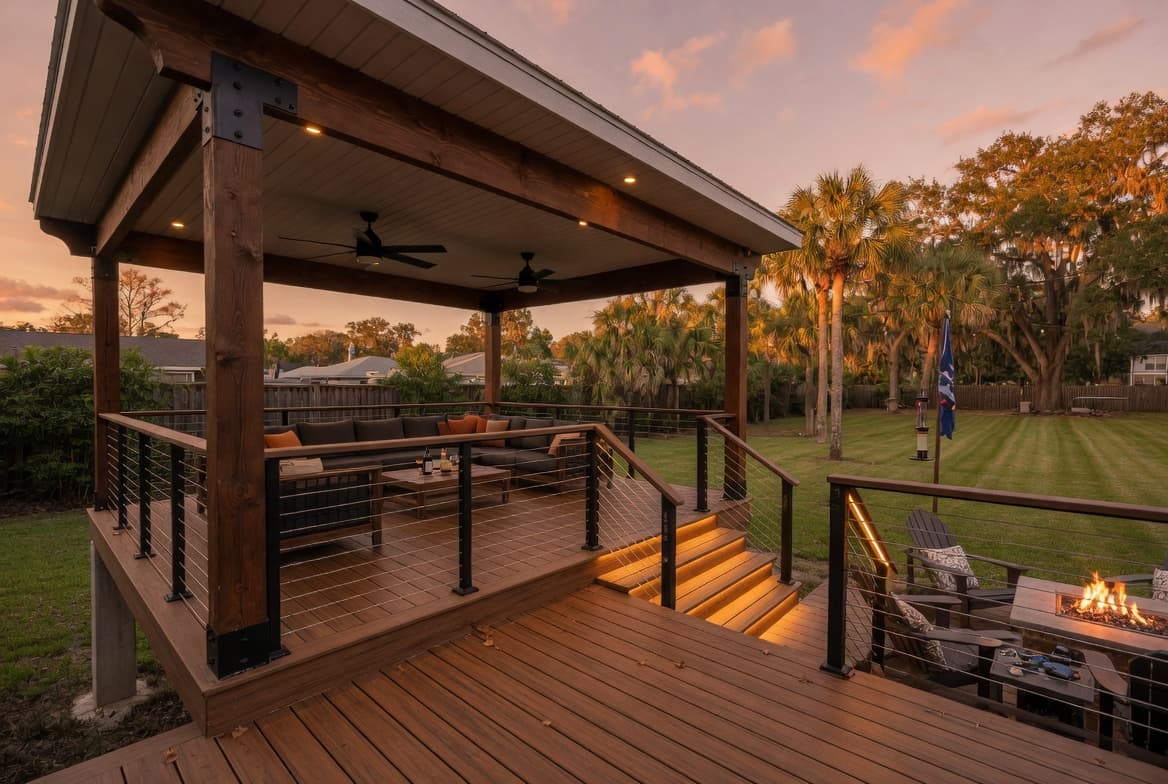
Composite vs. Wood Decking in Jacksonville, NC
It's the first fork in almost every deck project: composite or wood? Both build a great deck, but they age very differently in our coastal climate. Wood costs less up front and asks for upkeep every year; composite costs more to start and then mostly leaves you alone. Here's an honest, Jacksonville-specific comparison so you can pick the one you'll be happy with five and ten years from now.
Want a real deck estimate?
Send a few project details and we'll come back with next steps. Most details are optional — share what you can.
- Tap your project type and material
- Name and phone — email optional
- We follow up to schedule the on-site visit
- Written pricing after we measure
Prefer to talk it through?
(910) 708-9268No pressure — we’ll follow up to learn about your project and the next steps.

What's the deck project?
One tap — we'll talk details when we follow up.
The short version
Pressure-treated wood is the lower up-front cost and the higher long-term effort — it needs cleaning, staining, and sealing on a schedule, especially in our humidity and sun. Composite (and full PVC like Azek) is the higher up-front cost and the lower effort — no staining, just an occasional wash. The closer your deck sits to salt air, and the longer you plan to keep it, the more the math tilts toward composite. Inland and on a tighter budget, wood still makes plenty of sense.
Up-front cost
Wood wins the day you build. Pressure-treated lumber is the most affordable decking material and is easy for a crew to work with, so the initial deck builder cost is lower. Composite boards cost more per square foot, and premium capped composite or PVC costs more still. But the up-front number is only half the story — what you spend over the life of the deck is where wood and composite trade places.
Maintenance — the deciding factor in coastal NC
This is where our climate does the talking. A wood deck in the Jacksonville area needs to be cleaned and re-sealed or re-stained regularly — sun breaks the finish down and humidity keeps the wood damp, so skipping it leads to graying, cupping, and splitting. Composite skips almost all of that: a wash with soap and water a couple of times a year is the routine. If you don't want a recurring weekend project, that difference matters more here than it would in a drier climate.
Lifespan and durability
Both last a long time when built right, but they fail differently. Wood is vulnerable to rot, insects, and the salt air near the water, and its lifespan depends heavily on whether it's kept sealed. Composite doesn't rot or splinter and resists insects and moisture, and major lines carry long fade-and-stain warranties. On waterfront and beach-area decks where salt is relentless, composite's edge in durability is hard to argue with.
Heat and feel underfoot
One honest mark for wood: it tends to run cooler in direct sun. Darker composite boards can get warm under a full Carolina afternoon — though lighter colors and some premium lines stay noticeably cooler, which is why we factor color into the recommendation for decks with heavy sun exposure. If barefoot comfort on a south-facing deck is a priority, it's worth talking through board color before you choose.
Looks, resale, and which to choose
Wood has a natural, classic look some homeowners love, while composite offers consistent color and a clean, finished, screw-free surface with hidden fasteners. For resale, a low-maintenance composite deck can be an easy selling point because the next owner inherits less upkeep. The practical decision usually comes down to two questions: how long will you keep the home, and how close are you to the water? Long stay or coastal exposure leans composite; shorter stay, tighter budget, or inland lot keeps wood firmly in the running. We'll lay out both on the estimate and let you decide.
Jacksonville Fence Planning Checklist
The more of these you can answer before you reach out, the more accurate the first estimate will be. None of it is required — share what you can.
We use this same list internally when we walk a property. You can fill the gaps when we follow up.
Start My Estimate- Fence purposePrivacy, pets, pool, security, curb appeal, or some combination
- Material preferenceWood, vinyl, chain link, aluminum — or 'help me decide'
- Approximate linear footageEven a rough estimate (200 ft, 400 ft, etc.) helps
- Gate locations and widthsSingle walk gate, double drive gate, equipment access?
- Property line or surveyIs the line marked, confirmed by survey, or uncertain?
- HOA or neighborhood rulesMaterial, color, or height restrictions to confirm?
- Removal of an old fenceIs there an existing fence to tear out and dispose of?
- TimelineASAP, within 30 days, 1-3 months, or just researching?
- PhotosPhone-camera shots of the property line speed things up dramatically
Frequently asked questions
Is composite decking worth the extra cost in coastal NC?
For many owners here, yes. The humidity, sun, and salt air that make a wood deck a yearly maintenance project barely affect composite, so you're trading a higher up-front cost for far less upkeep over the life of the deck.
Does composite decking get too hot to walk on?
Darker composite boards can get warm in full afternoon sun. Lighter colors and some premium lines stay cooler. If your deck faces heavy sun, we'll steer the color choice with that in mind — wood does tend to run a little cooler underfoot.
How long does a wood deck last in the Jacksonville area?
It depends heavily on upkeep. A pressure-treated deck that's kept cleaned and sealed can last many years; one that's neglected in our humidity and sun grays, cups, and rots far sooner. Sealing on a schedule is what protects the investment.
Can I put composite boards on my existing wood frame?
Sometimes. If the existing frame is structurally sound and spaced correctly for composite, we can re-deck over it. If the framing is questionable, we'll tell you — composite belongs on a solid substructure, not a failing one.
Which adds more resale value, wood or composite?
Both add value as outdoor living space. Composite can be an easier selling point because it hands the next owner a low-maintenance deck, but a well-built, well-kept wood deck shows beautifully too. Condition matters more than material at resale.
Browse related deck services
Specific services in Jacksonville, NC that connect to this guide.
Composite Deck Builder
Composite and PVC deck building across Jacksonville and Onslow County — Trex, TimberTech, Azek, and Fiberon decks that shrug off coastal humidity.
Learn more →Trex Deck Builder
Trex composite deck building across Jacksonville and Onslow County — Trex boards and railing installed to spec for low-maintenance coastal decks.
Learn more →Deck Installation
New deck construction across Jacksonville and Onslow County — wood and composite decks built with proper footings, framing, and railings for coastal NC.
Learn more →Deck Replacement
Deck replacement and rebuilds across Jacksonville and Onslow County — tear out an aging wood deck and rebuild in wood or low-maintenance composite.
Learn more →Other Jacksonville deck guides
How Much Does a Deck Cost in Jacksonville, Maysville & Coastal NC?
The real drivers of deck pricing in Jacksonville — size, material, railings, stairs, demo, and permits — and why a per-project estimate beats a flat number.
Deck vs. Patio: Which Is Right for Your Jacksonville, NC Home?
How your yard's grade, drainage, budget, and goals should decide between a raised deck and a ground-level patio in coastal NC.
Deck Permits in Jacksonville & Onslow County: Yes, You Need One — Here's What It Involves
Yes, decks need a permit here — what the application takes, the five inspections, and how we pull it for you.
Related articles
Seasonal prep, maintenance routines, and local know-how connected to this guide.
Trex vs. TimberTech: Picking Composite Decking for Coastal NC
Both brands work in coastal NC — here's the framework for choosing, and why the frame matters more than the logo.
A Year-Round Deck Maintenance Calendar for Coastal North Carolina
Season-by-season deck care for Onslow County — spring checks, hurricane readiness, fall cleanup, and what mild winters are good for.
Still deciding between composite and wood?
Tell us where the deck sits and how long you plan to stay, and we'll walk through both with a real estimate — no pressure either way.